

Learn more
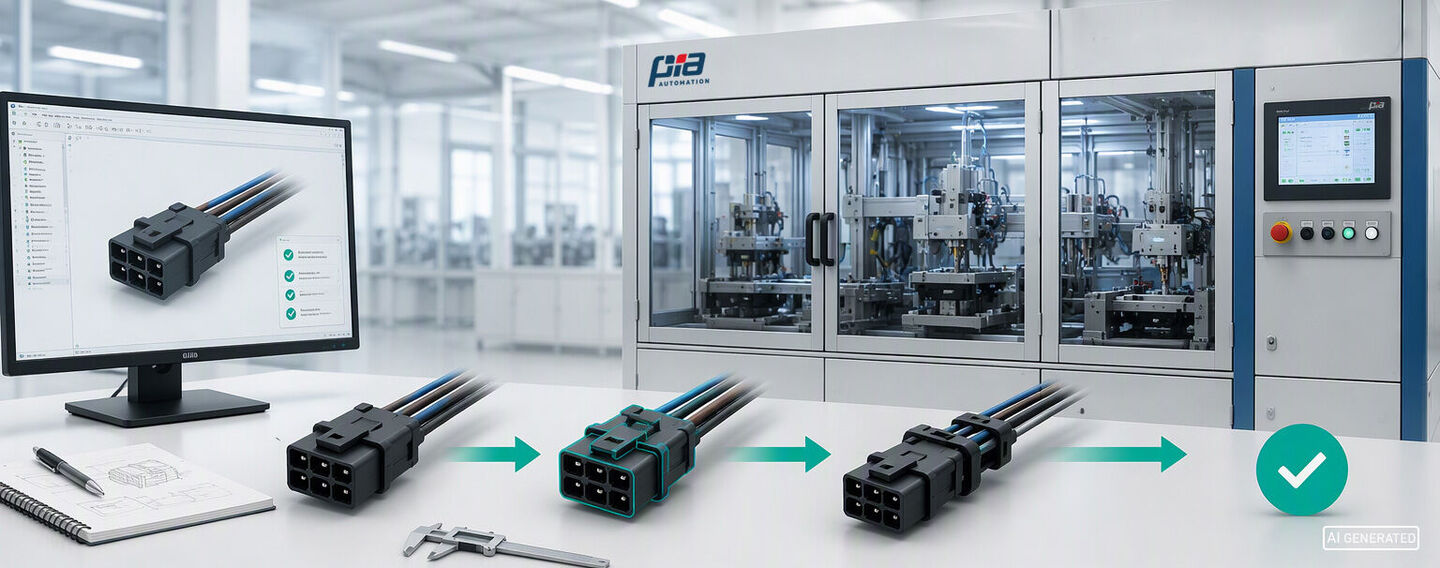
Design for Automation delivers measurable benefits
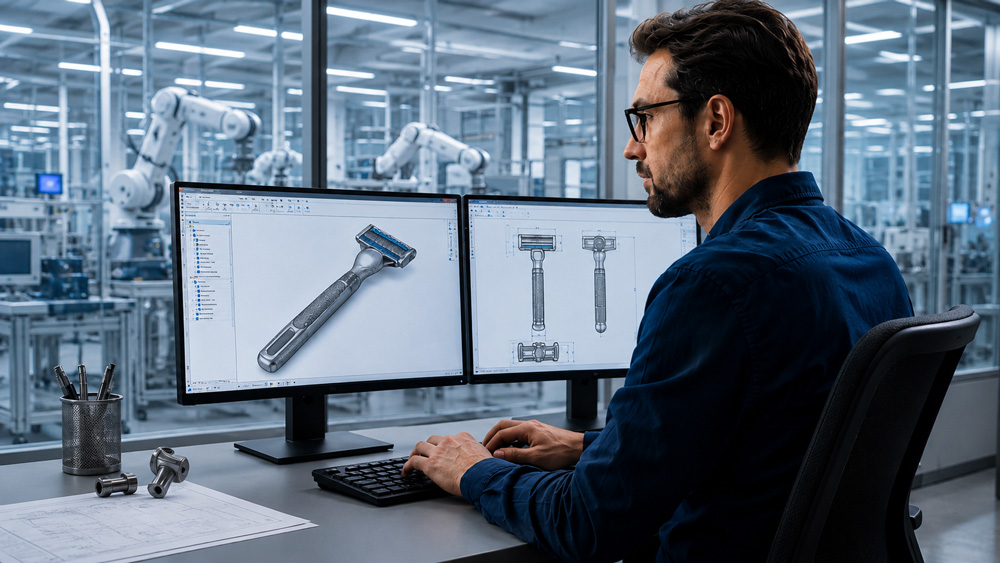
Up to 80% of production costs are determined during the development phase
Successful automation begins long before the first production line is built. With Design for Automation (DFA), PIA helps companies optimize product designs early in the development process to enable efficient, cost-effective, and scalable production.
This reduces complexity, minimizes production risks, and lowers investment costs.
Why DFA
When automation requirements are not considered until after product development is complete, the following challenges often arise:
- Complex handling concepts
- Costly custom solutions
- Higher investment costs
- Longer project durations
- Increased production risks
With DFA, PIA identifies optimization opportunities early in the development process and lays the foundation for efficient, scalable industrialization.
Benefits of DFA
Shorter Time-to-Market
Early identification of optimization opportunities and accelerated industrialization help shorten development and production ramp-up times.
Reduced Capital Expenditures
Automation-ready products enable simpler production line designs and reduce the need for costly custom solutions.
Higher Product Quality
Optimized designs, stable manufacturing processes, and enhanced testing strategies improve overall product quality..
Greater Process Reliability
Robust handling, assembly, and testing processes reduce risks and ensure stable mass production.
- 01. Product & Process Analysis
- 02. Automation Potential Analysis
- 03. Optimization Recommendations
- 04. DFA Report & Roadmap
01. Product & Process Analysis
01. Product & Process Analysis
- Design Review
- Component Analysis
- Assembly Concept
- Quality Requirements
02. Automation Potential Analysis
02. Automation Potential Analysis
- Process Capability
- Quality and Verifiability
- Traceability
- Parts Provision/Condition of individual parts
- Component Handling
- Degree of Automation and Risks
03. Optimization Recommendations
03. Optimization Recommendations
- Geometric adjustments
- Tolerance optimization
- Reference surfaces
- Test concepts
- DFM/DFA recommendations
04. DFA Report & Roadmap
04. DFA Report & Roadmap
- Quick Wins
- Risks
- Saving Potential
- Automation Concept
- Roadmap
Impact of DFA
Without DFA
- Complex part geometry
- Difficult feeding
- Special grippers required
- Longer cycle times
- High investment costs
With DFA
- Automation-friendly design
- Standardized feeding
- Standard handling possible
- More efficient processes
- More cost-effective production solution
Design for Automation lays the foundation for cost-effective, scalable, and future-proof series production.
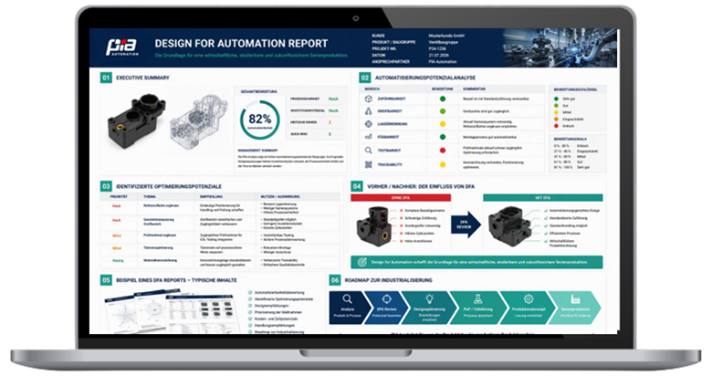
The DFA Report provides a clear foundation for informed decisions regarding product development and industrialization.
- Transparent assessment of automatability
- Concrete optimization proposals
- Early identification of risks
- Prioritized recommendations for action
- Basis for cost-effective production solutions
Why Choose PIA for Design for Automation?
PIA approaches product design with future automation in mind from the very beginning.
Drawing on decades of experience in automation and production line engineering, we identify optimization opportunities early in the development process and lay the foundation for cost-effective, robust, and scalable production solutions.
Everything from a single source
- Design for Automation (DFA)
- Proof of Principle (PoP)
- Production concepts
- Automated production and testing lines
- Digital solutions & services
- Global service & support
One partner - from the initial automation assessment to successful series production.
Questions?
Get in touch
Assess the automation potential of your product early on.

Questions? We have the answers.
Here you'll find answers to the most important questions about Design for Automation (DFA).
A DFA analysis is particularly useful when a product is still in development or when planning for automated manufacturing is just beginning. The earlier the potential for automation is considered, the greater the impact on future investment costs, process reliability, and production performance.
No. The greatest benefit is realized in the early stages of development, when adjustments to the product design can still be implemented with minimal effort.
For an initial assessment, CAD data, drawings, product concepts, bills of materials, or information on the planned production volume are often sufficient.
The scope depends on the complexity of the product and the desired level of detail. Initial assessments can often be completed within a few days. More comprehensive analyses are tailored to the specific project.
Yes. Many companies use DFA to optimize existing products for higher production volumes, new production sites, or planned automation projects.
Yes. A DFA analysis can be conducted for complete products as well as for individual assemblies, components, or particularly critical manufacturing and assembly processes.
The results form the basis for the next steps in industrialization. Upon request, PIA provides support in validating critical processes, developing production concepts, and implementing automated manufacturing solutions.
All information provided is treated confidentially. In most cases, non-disclosure agreements (NDAs) are signed before the project begins.
No. Responsibility for the product design and all rights to the product remain with the customer. PIA evaluates the product’s suitability for automation and provides recommendations for optimization with regard to future manufacturing and automation.