
New high-performance assembly and packaging line for razor cartridges
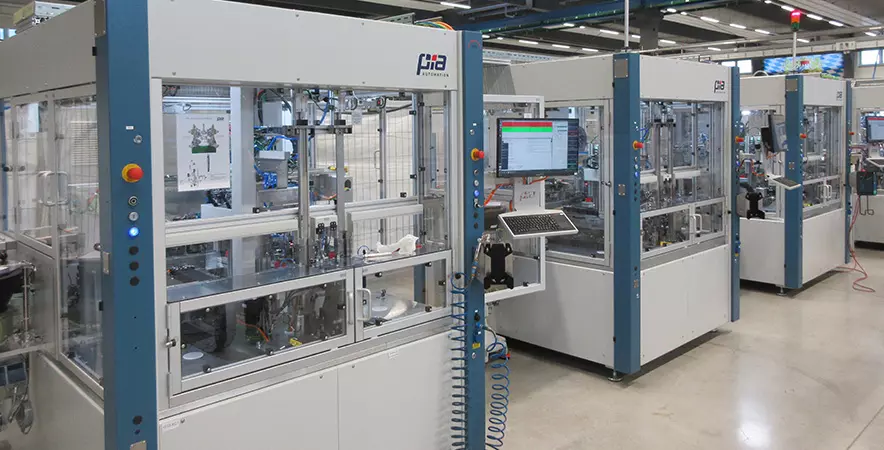
PIA Automation has developed and successfully commissioned a new assembly and packaging line for razor cartridges in close collaboration with a long-standing customer. The system is designed for the high-precision processing of delicate blade units and enables stable and reliable high-volume production under demanding manufacturing conditions.
Stability in a high-performance process
For a close and safe wet shave, the quality of every single razor cartridge is crucial. In particular, the processing of extremely thin, hardened and sharpened blades places the highest demands on fully automated assembly handling, process reliability as well as repeat accuracy.
To meet these requirements, the new production line was consistently designed for maximum output while ensuring high production stability.
Use of patented PIA multi-blade technology
A key element of the system is PIA’s proven multi-blade stations. Blade singulation and assembly are among the most demanding process steps in automated razor cartridge manufacturing and require a particularly high level of process control, especially at high output rates.
“Our multi-blade stations are specifically engineered for high-speed applications of this kind,” explains Tim Schuller, Product Manager at PIA. “As part of this project, we further optimized the technology for both blade singulation from the magazine and precise insertion into the cartridge frame. The result is a highly stable, low-wear assembly process that ensures reliable long-term operation at maximum throughput.”
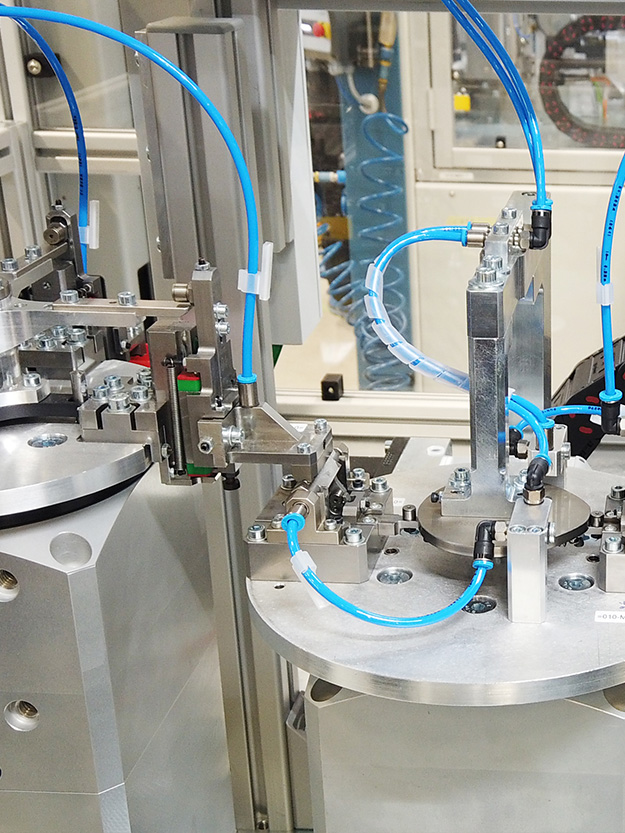
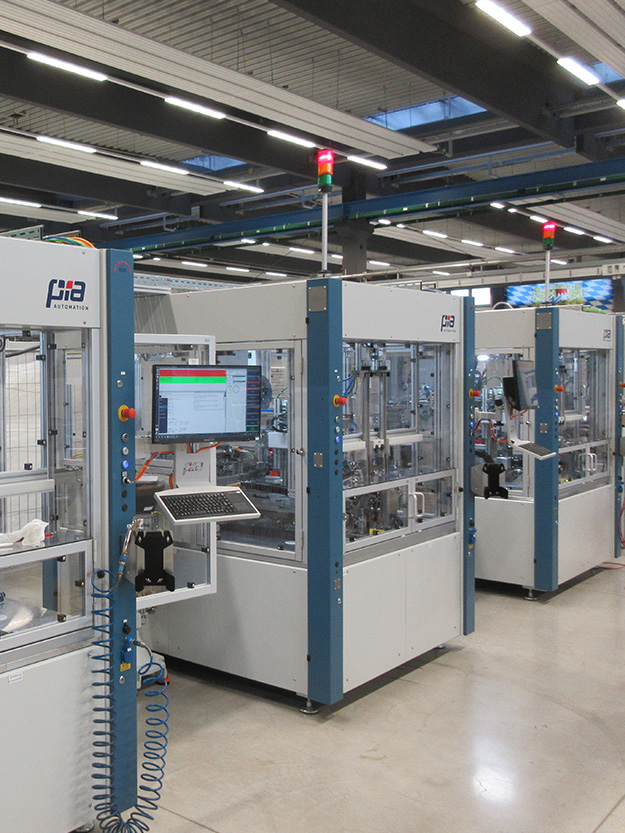
Spanning an area of approximately 35 × 12 meters, the line connects multiple assembly units – including six multi-blade stations – via two parallel high-speed transport systems developed specifically for this application. Each module is equipped with fully automated infeed and outfeed functions for the required components.
This ensures continuous material flow while enabling targeted decoupling of individual process steps. “Assembly cycles with longer cycle times can therefore be executed multiple times within the same production line without reducing overall output,” Schuller explains. “The workpiece carriers are distributed across several cycle-critical stations to avoid unnecessary downtime.”
In addition, individual modules can be selectively shut down for maintenance or service work without interrupting the operation of the overall system. As a result, the line remains productive at reduced output, minimizing maintenance-related production losses.
The final assembly and inspection processes are carried out on a Beckhoff XTS linear transport system. The transport concept integrates end-of-line (EOL) inspection for every razor cartridge produced using a specially developed combination of 2D cameras and 3D laser line scanners. In addition to standard vision inspection tasks, the blade extrusion angle is measured, a key quality parameter for achieving an optimal shaving result for the end customer.
Following the EOL tests, the system performs fully automated packaging of the cutting units. Depending on the product variant, the razor cartridges are either individually fitted with protective caps or packaged in multiples within a refill dispenser. In this way, different market requirements can be realized within the same line without additional changeover time.
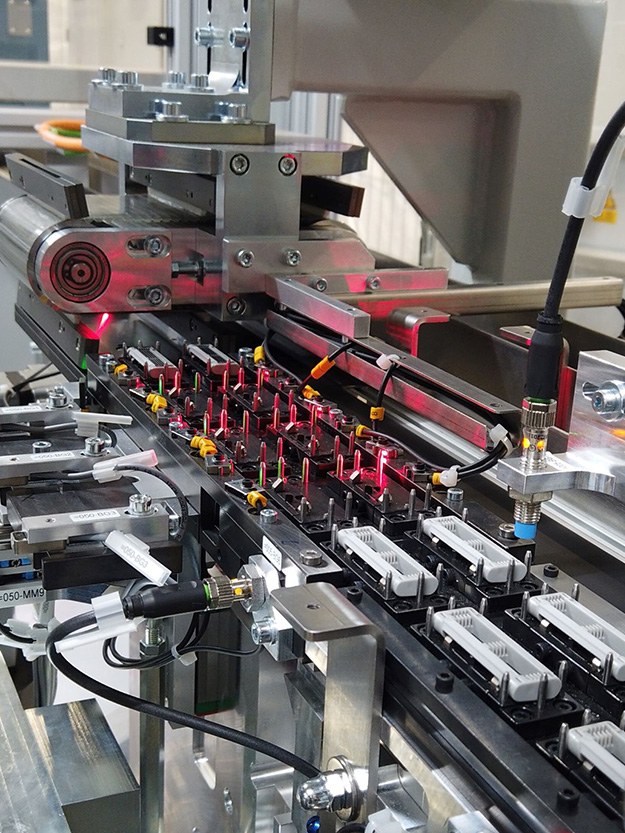

With this new assembly and packaging line, PIA Automation once again sets industry-specific standards in the high-volume assembly of delicate shaving components. The experience gained from previous projects formed the foundation for the targeted refinement of individual process steps and the successful achievement of ambitious objectives in terms of performance, precision, process reliability and operational safety.
“The project demonstrates how important close collaboration and a shared understanding of processes are,” emphasizes Schuller. “On this basis, we were able to implement a solution that delivers both technical and economic advantages through a flexible system concept and the use of our multi-blade stations.”